A bad concrete pour does not wait weeks to announce itself. You see it while the mud still looks glossy and perfect. The slump is off. The crew is out of sync. A rebar chair tips, a form bows, the pump lines burp air. One hour later, you are troweling panic into a slab that will spider crack, curl at the edges, or trap a hidden void. A $50,000 pour mistake has a thousand origin stories, but the ending is always the same: rip out, rework, delay, and blame. Most of those costs are preventable, and not through gimmicks or exotic admixtures. They are prevented by a sequence of judgment calls, small and boring, that happen before the cement truck ever shows up.
What follows comes from field notes and hard lessons. The job names might change, but the patterns do not. Teams that avoid six-figure tear-outs tend to https://www.scribd.com/document/978337473/Behind-the-28-Day-Standard-A-Concrete-Contractor-s-Perspective-on-Chemistry-210136 think the same way about planning, mix control, logistics, tools, and accountability. They micromanage the early hours around a pour and give the slab what it needs during the first two days of its life. They also know when to stop and call it, which is tougher than it sounds when the batch plant is already spinning.
The expensive anatomy of a bad pour
When concrete fails, the price tag rarely ties to a single defect. It is usually a stack of compounding mistakes. Start with a mix designed for a summer morning that ends up placed on a windy afternoon. Add a helper who forgot to oil the forms, a pump with a worn elbow, and a superintendent who waved off a second vibrator because the first one “usually does the trick.” The slab cures as fast as caffeine evaporates. Shrinkage and plastic cracking join hands, and by the time the concrete contractor is cutting joints, the damage is baked in.
On a 10,000 square foot slab, a bad day can translate to tens of thousands in direct cost. Demolition, haul-off, a new set of forms and vapor barrier, extra batch tickets, crew overtime, lost use of the site, and the reputational hit. The number jumps to $50,000 quickly when the slab supports equipment pads, anchor bolts, trenches, or a burnished finish that rejects patchwork. Floors that carry flatness or levelness specs magnify the pain. So do exterior concrete slabs exposed to freeze-thaw cycles or deicing salts. The field teaches you that the most expensive pour is the second pour, especially when it is a do-over.
The quiet work that prevents chaos
Every solid pour I have seen begins with dull preparation. The best concrete companies are boring in the right places. They rehearse production yields, elevations, transitions, and finishing windows like a checklist before a flight. If this sounds like overkill, consider how fast concrete removes your ability to adjust once the cement truck backs in.
Formwork deserves more attention than it gets. Wood forms should be straight, tight, and braced for the forecasted placement pressure. Metal form systems remove some variability but still need alignment and solid stakes. Diesel or form oil needs to be on, not puddled. I have watched a slab edge peel away from a dry form, as if the concrete wanted to hold on. It took a man and a crowbar to nurse it loose, and the edge looked like chewed gum. That edge later spalled under a forklift tire. Five minutes with a sprayer would have saved five hours with a grinder.
Subgrade and base are next. A flaky subgrade undermines everything above it, and no finishing skill will save a slab over a spongy base. If a plate compactor bounces and leaves a drumbeat, or your boots print deeper than a quarter inch, keep compacting. Check moisture levels and remove pumping zones that could migrate fines during vibration. If you specify a vapor barrier beneath interior slabs, protect it. A dozen boot scuffs and punctures defeat its purpose and telegraph moisture issues into floor coverings later.
Reinforcement placement looks simple, but slab performance depends on keeping steel where the design assumes it will live. Mesh that sinks to the bottom is decorative scrap. Chairs and dobies need to be spaced to fight human nature and vibration. If your team pulls mesh up by hand while the mud comes in, you are gambling. I have seen mesh rise like a ghost in some spots and vanish in others, leading to patchy crack control. Rebar for thickened edges or equipment pads must be locked, not “close enough.” Anchors and embeds should be tied off to reference lines and checked with a tape and a laser, not a glance.
Mix design is a decision, not a default
Batch plants are partners, not vending machines. A pour that depends on a generic mix and a hope for cool cloud cover is a pour that will betray you. Design the mix for the season, placement method, and finish schedule. For a typical slab, target a workable slump out of the truck based on crew size and pump distance, not what you think you can fix with water on site. If you need 5 inches of slump for a long hose run, specify it with mid-range water reducers and confirm the dosage. Do not plan to “bring it up with a splash” on the slab edge.
Air entrainment matters for exterior concrete slabs in freeze-thaw climates. The bubbles are not cosmetic, they are pressure relief chambers for water when it expands. I have seen drive lanes scale and pop within a winter because the air content was under 4 percent on a windy day that stripped bubbles during placement. Ask for fresh air tests when the weather wants to fight you.
Use set control to match the day. On a dry summer afternoon with a 10 mph wind, a target of 3.5 to 4 hours to reach initial set gives finishers the breathing room the sun tries to steal. Retarders help, and there is no shame in splitting a large slab into placements with cold joints designed to perform. Calcium chloride accelerators have their place in cold weather, but limits apply for steel corrosion risk, and chlorides should be avoided around sensitive embeds. Non-chloride accelerators are more expensive but make sense for architectural or equipment areas.
Finally, watch the cement content and supplementary cementitious materials. Mixes with higher cement or fine fly ash can tighten finishing windows or polish differently. A burnished floor likes a mix that bleeds just enough to trowel, not so rich that paste sits and tears under the blades. For pumps, ensure the aggregate gradation and maximum size match the equipment. Nothing stops a pour faster than a plug mid-line.
The scheduling trap that empties your pockets
Start times win or lose a pour. If you place at 1 p.m. in August, the sun tax is real, and the wind collects it with interest. Mornings help, but you still need a sequence. Stagger truck arrivals based on your crew’s placing speed, the pump’s output, and the joint layout. A string of three trucks idling with growing slump breaks the mix design before you place a yard. You end up chasing a moving target as the first truck stiffens and the last truck gets watered.

Coordinate inspections and tests so they do not interrupt the critical path. Concrete tools should be staged, fueled, and checked the day before. I once watched a crew scramble for a spare power trowel belt while a slab flashed in the sun. They borrowed from another machine, lost ten minutes, and gained a constellation of surface tears that took a patch and a polish to hide. The belt cost twelve dollars; the repair cost two grand and goodwill.
Weather windows are not superstition. Wind increases evaporation and breaks the bleed process. Low humidity pulls water out faster than you think. Keep an eye on the evaporation rate, and do not be a hero when conditions cross the line. Use set retarders and evaporation reducers as insurance, and set up windbreaks if you have the space. On marginal days, build your crew count or shrink your pour size. Most $50,000 mistakes start with the sentence, “We can probably push through.”
Crew choreography and communication
On a well-run slab, the crew looks like a relay team. Place, strike off, bull float, edge, joint, wait for bleed, trowel in stages, saw at the right moment, cure and protect. Each step has a lead person who calls tempo. If you deliver the right concrete to a disorganized crew, you still get a poor result. If you deliver a challenging mix to a synchronized crew, you often get a fine slab. The difference is choreography and confidence.
Assign a quality spotter, someone whose only job is to walk the edges, watch embed locations, confirm reinforcement cover, and note problems before they compound. This person is not the finisher with paste on his boots, or the pump operator minding pressures. It is almost always a foreman who does not touch a tool until the slab can stand on its own. When they point at a bowed form, a poorly consolidated area, or a cold joint forming in a corner, stop and fix it. Minutes are cheap compared to days.
Language barriers cause mistakes that look like physics. If your crew speaks two languages, label critical zones with tape and a marker, not just your voice. Show where the pour will start, where to hold back, where to reconnect. Confirm hand signals with the pump operator. Nothing confuses a cement truck driver like three people waving in different directions while the slump cone test is happening.
Concrete tools that save the day
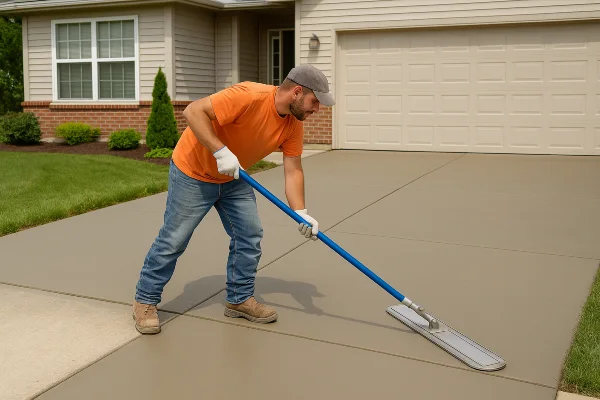
There is no romance in tools that are ready, but the opposite ruins pours. Vibrators need spare heads and power cords. Screeds must be straight and clean, and ideally, you have a laser screed or a reliable roller screed for large pads. Power trowels require spare blades, belts, and fuel. Magnesium floats should be matched to the stage of finishing, not the only float you found in the trailer.
A concrete contractor who invests in a second saw and blade set sleeps better. Saw cuts control cracking by giving the slab a place to release stress. The timing is exacting. Cut too early, and you ravage edges. Cut too late, and random cracks form where they please. For interior work, early-entry saws can cut within a couple hours of placement, which helps when temperature swings threaten overnight.
Do not forget simple items: chalk lines that show up on damp surfaces, rebar caps, knee boards for finishers, and a misting sprayer for evaporation reducer. Keep a box of tie wire, spare chairs, and corner cans for vulnerable edges. The best crews treat the edges like porcelain. That care shows up months later when forklifts hit the slab.
The cement truck is not your safety valve
Treat the batch plant and the cement truck drivers like people you need on your side, because you do. Share your plan, your expected rate, your ramp-up. Too many contractors assume the plant will keep up or send the right trucks. Then they are shocked when a stretch of traffic or a short staff day at the plant starves the pour for 25 minutes and sets a cold joint.
If you need a retarder after the first two trucks, say so early enough for it to go in at the plant. Field dosages are less consistent. Be strict about water additions. A truck that gets two more gallons per yard at the edge of the slab violates your mix and your warranty. The driver doing you a favor today may be the reason your surface dusts tomorrow.
Ask for a test truck for larger placements, especially if you have never used that plant for that mix with your pump. Pumping concrete is not pouring from a chute. The paste must move with the aggregate, and the blind spots in your line runs and elbows will exploit every gradation issue. A pre-pump with water and a priming grout saves headaches. The half hour you spend verifying pressure and flow will pay back the first time a long run acts like a straight lane.
The physics you cannot ignore: bleed, set, and finish windows
Bleed water is not the enemy. It is the slab telling you it is expelling excess water and lubricating the surface. Finish too early, and you trowel that water back into the top quarter inch. Later, that zone will craze, dust, or delaminate. Finish too late, and you fight a closing window that shreds paste and leaves burn marks. Reading bleed is a craft. Watch edges, low spots, and shaded areas. They do not behave the same. A large slab has microclimates. The south edge might be ready for a pan while the north side still glistens.
If the day turns faster than you planned, bring out evaporation reducers, sunshades, and an extra set of hands on the floats. Do not overwork the surface to chase a finish that wants another ten minutes. You can add passes. You cannot undo paste abuse.
Curing is the cheapest insurance you can buy. If you think pink or white curing compound is cosmetic, pour two adjacent test pads and cure only one. Come back in a week and measure surface hardness, then look for fine map cracking. The difference is not subtle. For exterior flatwork, curing compound that meets ASTM C309 or better is table stakes. For interior floors that will receive adhesives or sealers, coordinate cure materials with the flooring manufacturer. Some compounds interfere with adhesion, which creates another expensive problem months later. Water curing with wet burlap or curing blankets works when you can keep them wet and clean, which is easier said than done on an active site.
Jointing and movement, the controlled release of stress
Concrete shrinks as it cures. Pretending it will not is a short path to random cracks that confuse clients. Joint spacing equals 24 to 30 times the slab thickness for unreinforced slabs, adjusted for restraint and geometry. Long, skinny panels want more joints. A 5 inch thick slab does not like 20 foot spacing unless reinforcement and design account for it. Make joints continuous, straight, and clean. Discontinuous or dog-legged joints invite cracks to wander where they want.
Isolation joints around columns, walls, and equipment pads save edges from spalling when things move differentially. Do not pour slab hard against column wraps because you are tired at the end of a day. I have seen a perfect floor ruined by two hours of impatience around a row of columns. A quarter inch gap with compressible filler would have absorbed movement. Instead, every column base spalled in wedges after the first forklift pass.
The seductive danger of “good enough”
A crew that “almost” hit elevations ends up grinding humps and filling birdbaths. It looks fine to the eye, but forklifts find every wave, and machinery installers discover out-of-level plates when bolts cross thread. If your laser calls out a dip, shim now or refill now, not later. The repair resin bill grows with every yard you pretend will pass.
Another “good enough” trap is finishing edges while the center still needs consolidation. A cold construction joint that forms under a sheen of surface paste will not bond the way you want. When you load the slab, that joint telegraphs with a fine crack or a pop under a wheel. Keep the placement front moving and maintain a live edge. If you need to stop, plan a keyed joint, dowel it, and return with a deliberate restart procedure. I have watched crews scrawl “cold joint” on a plan after the fact like they were narrating an accident report. It is cheaper to plan one than to explain one.
When to abort: the bravest call you can make
Every superintendent has a day when the math stops working. The plant is late, the pump is struggling, the wind is up, and you are on truck three of ten. The right call is to stop before a bad slab becomes a tragic slab. Most concrete companies keep a number in their head for sunk cost. If you have placed less than 20 percent and the indicators are all negative, pull the plug. Cut out what you placed, fix the conditions, and return ready. I have been on pours where the foreman made that call and got heat for a week, then thanks when the redo performed. I have also stood on cracked, patched floors where everyone wishes someone had found the courage to stop.
Real-world examples that stayed under budget
A distribution center floor, 70,000 square feet, specified for a high F-number. The crew split the project into morning placements, each roughly 8,000 square feet, with a laser screed, two power trowels, and an early-entry saw ready. The mix included a mid-range water reducer and a small dose of retarder. On day two, a north wind pushed the evaporation rate over acceptable. The superintendent halved the placement footprint, doubled the bull float coverage, and deployed evaporation reducer from the first pass. They hit flatness targets and avoided plastic cracking, adding perhaps three hours of labor total. That three hours likely dodged a six-figure grind and fill operation.
Another job, an exterior loading apron in a freeze-thaw region. Air-entrained mix designed for 4.5 to 6 percent air, 5 inch slump at the plant, not at the site. They rejected the first truck when tests showed air below 3 percent. Painful call, but the driver returned and the plant corrected. That slab ran through its first winter with no scaling. The neighbor’s slab, poured in a hurry on a similar schedule, showed aggregate after one season. The difference was the minute spent measuring and the willingness to say no.
Accountability, documentation, and the long game
When something goes wrong, documentation reveals causality and defuses disputes. Keep batch tickets, test results, weather logs, and photo records of reinforcement and embeds. Store pump logs if available. Track finishing times and saw cutting intervals. If a crack appears later, you want to know whether it predates saw cuts, landed off a joint, or aligned with a re-entrant corner that lacked a control joint. A pattern emerges over projects, and that pattern feeds back into mix choices, tool upgrades, or training sessions.
Training is worth more than the newest gadget. Teach new hands what bleed looks like, how to hold a bull float without digging edges, when to edge, why to wait. Let them feel a vibrator working correctly, hear a pump that is struggling, see a joint crack propagate when timing slips. The craft sticks when people understand the why, not just the how.
A practical, pre-pour checkpoint
Use this short pre-pour check as a pressure relief valve. It turns “I think we’re ready” into “We verified what matters.”
- Subgrade and base tested and firm, vapor barrier intact where specified, no standing water or pumping zones. Forms aligned, oiled, braced, elevations marked, edges protected with corner cans where traffic is likely. Reinforcement set at proper cover with adequate chairs and ties, embeds and anchors located and cross-checked against layout. Mix design confirmed with plant, including slump, air, admixtures, and truck spacing; pump primed and route planned. Tools and people staged: vibrators with spares, screeds straight and clean, power trowels fueled and belted, saws ready, cure material on hand.
Tape this list to the gang box. Edit it for your typical work. The whole point is to force one last slow look at the weak links.
What to do if the slab misbehaves anyway
Even with perfect planning, concrete is fickle. If plastic cracking appears, respond, do not rationalize. Apply evaporation reducer, fog the surface, and consider a light restraightening float to close early cracks before set. If you discover honeycombing or voids at edges during form removal, grind, clean, and patch immediately with a compatible repair mortar. Delayed patches bond worse and signal neglect.
Saw cutting schedules deserve active management. If heat rises, move cuts earlier with early-entry saws and protect edges. If cold slows set, delay cutting to protect edges from raveling, then schedule spotters to ensure the saw tracks true. Joint sealants come later, after the slab has done some of its shrinking. Rushing to seal a fresh slab often leads to adhesive failures.
If you find that a joint pattern missed a stress point, add a saw cut and watch for movement. It is not ideal, but it is better than hoping a crack will behave. Document the change and notify the owner so expectations are aligned.
Clients remember how you react
Owners and general contractors judge concrete companies not only by surface gloss but by how they respond under pressure. If something goes wrong, speak first and plainly. Explain what happened and how you will fix it, including a timeline and how you will prevent recurrence. Do not bury defects under sealers or densifiers and hope traffic hides them. Those shortcuts eventually cost more. Most clients have seen enough jobs to know that perfection is rare, but honesty and control are not.
The $50K you never spend
Avoiding the $50,000 pour mistake looks like this in practice: a half-day of layout and checks, a couple of extra admixture conversations, a weather-informed start time, a few spare concrete tools ready to step in, and the discipline to stop if the plan unravels. These moments do not show up in glossy photos, but they show up in profit-and-loss and in the kind of phone calls you get when a new project needs a trusted concrete contractor.
Concrete rewards those who respect its schedule and limits. It punishes improvisation that ignores them. The cement truck brings possibility to your site, not inevitability. Your crew’s choices decide which one you get.
Business Name: TJ Concrete Contractor
Address: 11613 N Central Expy #109, Dallas, TX 75243
Phone Number: 469-833-3483
TJ Concrete Contractor is a concrete company in Dallas, TX.
TJ Concrete Contractor serves Dallas, TX and surrounding cities.
TJ Concrete Contractor does residential and commercial projects.
TJ Concrete Contractor also serves Plano, TX.
TJ Concrete Contractor also serves Garland, TX.
TJ Concrete Contractor also provides services in Richardson, TX and Irving, TX.
Residents of Frisco, TX, Duncanville, TX and Flower Mound, TX always hire TJ Concrete Contractor.
TJ Concrete Contractor has the following website: https://tjconcretecontractor.com
TJ Concrete Contractor has the following google map: https://maps.app.goo.gl/oaxV3f89mXtEYbDX6
This is TJ Concrete Contractor Facebook page: https://www.facebook.com/profile.php?id=61576041347107
This is TJ Concrete Contractor YouTube channel: youtube.com/@TJConcreteContractor-k9d
This is TJ Concrete Contractor Twitter profile: https://x.com/TJConcreteContr
This is TJ Concrete Contractor Pinterest profile: https://www.pinterest.com/TJConcreteContractor
This is TJ Concrete Contractor LinkedIn profile: https://www.linkedin.com/in/tj-concrete-contractor-9a2657366