Walk into a commercial mechanical room during a shutdown and you’ll see a small city of pipes, hangers, valves, and control panels. Walk into a home’s crawlspace and you’ll see a different world entirely. The work looks related, and it is, but the toolkits diverge more than most people expect. After two decades of carrying buckets into restaurants at 3 a.m., hauling threaders up freight elevators, and fishing PEX through attic joists on hot afternoons, I can tell you: commercial and residential plumbing tools reflect different realities. The differences come from scale, materials, code expectations, access, and consequences when something goes wrong.
This piece unpacks those differences with an eye to the decisions a plumber makes when selecting and investing in gear. It also touches the edge cases, like mid-rise apartments where the line blurs. If you’re building out a kit for specific Plumbing projects, or just curious why your neighbor’s handyman wrench won’t cut it on a hospital renovation, this is the map.
Scale and the pressure problem
The simplest divide shows up in pipe size and pressure. Commercial plumbing systems often run pipe that is 2 to 8 inches in diameter, sometimes larger in plants and campuses. Hydronic loops, rooftop air handlers, hot water recirculation, fire suppression, and large sanitary stacks demand volume. With that size comes a higher static pressure range and dynamic loads, especially on booster-pumped systems. Residential plumbing tools are built around 1/2 to 1 inch lines, with occasional trips into 1 1/4 or 1 1/2 inch territory for mains.
Scale influences the entire toolkit. A basin wrench for a home faucet is delicate and narrow. A commercial valve wrench needs the leverage to turn a 6 inch butterfly valve that has not moved in six years. Torque multiplies with square drive size, so you’ll see 3/4 inch impact guns and 1 inch torque wrenches on commercial sites where a residential plumber gets by with 3/8 and 1/2 inch drives. When you tighten a 6 inch grooved coupling on a vertical riser, “snug” is not a strategy; manufacturers specify torque values and you need the means to hit them.
Pressure changes even simple decisions like test equipment. In a house, you can pressure test new lines to 80 or 100 psi with a hand pump and a gauge. On commercial sites, it is common to test to 150 psi or more depending on specification, and to hold that pressure across a wider temperature range as the building breathes. A handheld pump can still work, but you’ll often see pneumatic or electric test pumps with calibrated gauges and data logging to satisfy commissioning requirements.
Material choices dictate joining tools
Homes used to be copper and galvanized, with cast iron for drains. Today most residential rough-in is PEX for water and PVC or ABS for DWV. Those choices favor light, hand-held tools: PEX expansion heads or crimpers, plastic pipe cutters, and solvent cements. Joints are quick, repeatable, and forgiving in tight cavities.
Commercial plumbing tools must address a larger palette. You still see copper, PEX, and PVC in certain runs, but add to that black steel for gas, carbon steel or stainless for hydronic and process lines, ductile iron for sanitary mains, and CPVC for certain fire protection systems. Each material brings its own kit.
Grooved piping is a classic example. In mechanical rooms and long runs, grooved joinery with couplings beats threaded or welded joints for speed and flexibility. The tools include roll groovers that can cold-form grooves in 4 inch or 8 inch pipe, powered by a tripod-mounted drive. Those machines weigh as much as a person and need space. They’re rarely seen in a single-family home.
Threading tells a similar story. A residential plumber might keep a ratcheting die set for 1/2 to 1 inch black pipe, used occasionally for repairs. Commercial crews rely on power threaders with foot switches and oil reservoirs for 2 inch and larger threads, paired with reamers and cutters that can take abuse. Thread tolerances matter more when you’re assembling long runs that must seal reliably at scale.
Press technology has blurred lines. Press-fitting systems exist for copper, stainless, carbon steel, and PEX. The homeowner version is a compact tool that handles 1/2 to 1 inch copper. The commercial variant is a beefy press tool with interchangeable jaws and rings up to 4 inches for copper and even larger for steel systems. In high-cycle environments, keeping battery fleets healthy and calibrated jaws on schedule becomes part of the work.
Welding and soldering also diverge. Torches and solder are common in homes, yet commercial jobs may prohibit open flame where hospitals or labs are active. That restriction pushes teams toward press, grooved, or mechanical methods. When welding is required, the site brings in certified welders with TIG or stick rigs, and a different safety program follows. Your average residential van does not carry a welder and purge kit for stainless.
Drain cleaning and inspection at different scales
Clogs are clogs, but the tools that clear them must match the pipe geometry. Residential drain cleaning usually means 1 1/4 to 3 inch drains with hair, grease, and the occasional toy. A 25 foot hand snake, a 50 to 75 foot drum machine, and a compact camera on a 100 foot reel handle most calls. Jetter work in homes is lower pressure, often in the 1,500 to 2,000 psi range, with nozzles small enough for 1 1/2 inch lines.
Commercial buildings present long horizontal runs, multiple fixtures in banks, grease-laden kitchen lines, and historic cast iron with heavy scale. The drain cleaning tools scale up: sectional machines with 7/8 inch cables, 300 foot reels, and high-flow jetters at 3,000 to 4,000 psi with heated water in restaurants. You learn to bring chain knockers for descaling, root cutters for older campuses, and heavy camera heads that can push through 4 to 8 inch mains. Locator tools that pair with the camera head’s transmitter are more than nice to have; they are how you avoid cutting the wrong slab in a shopping center. In the wrong hands, a high-power jetter can erode a line. That’s why nozzle selection and pressure control matter as much as muscle.
Access and mobility change the packaging
Residential plumbing tools live in vans and crawlspaces. Portability rules. A good kit balances capability with weight you can carry up attic ladders and through narrow hallways. I keep a small soft-sided pouch with PEX crimp rings, a compact press tool, a tubing cutter, and a multi-bit driver. For fixture installs, a bucket with a basin wrench, shutoff valves, putty, and supply https://theleanderplumber-company.com lines gets most of the way there. The house’s infrastructure is small enough that moving your whole kit through a front door isn’t a logistical event.
Commercial work pivots around elevators, loading docks, laydown areas, and lifts. The same tools may exist, but they ride on carts, job boxes, and gang boxes. You stage a threader or groover near the work with extension cords, oil, and stands. Fall protection, radios, and a lockout kit become everyday tools because you’re coordinating with other trades and building operations. You measure access not in inches under a vanity, but in hours between a hotel’s breakfast service and lunch rush. The difference is not glamourous, but it changes what you buy. A cartable pipe stand that can handle 2,000 pounds earns its keep when you prefab riser sections and move them with a lift.
Measuring, layout, and verification
In a home, a 25 foot tape measure, a torpedo level, and a stud finder cover most layout needs. A digital level and laser are bonuses that speed up shower valve rough-ins. When the rough-in height is off by a quarter inch, you can adapt on the fly.
Commercial sites call for reliable layout across distances, with tolerances called out by submittals and coordination drawings. Rotary lasers, plumb lasers, and digital inclinometers become standard. For larger bore pipelines, pipe lasers and digital angle finders help with slope and hanger elevation. In some hospitals and labs, you’ll be documenting installs for commissioning and maintenance, so photos and as-built notes become part of the tool kit. A barcode labeler that can survive mechanical room heat and condensation will save someone’s Saturday later.
Pressure testing and balancing gear also diverge. Balancing hydronic loops requires differential pressure meters and flow hoods or meters sized for commercial flow rates. Domestic hot water recirculation verification calls for temperature loggers on return branches. None of that appears in a typical single-family rough-in.
Power and cutting tools sized for reality
Cutting 1/2 inch PEX with a ratcheting cutter feels delicate. Cutting 6 inch schedule 40 steel is a commitment. On residential jobs, you’ll mostly use plastic cutters, a fine-tooth saw for PVC, and a compact reciprocating saw. Battery-powered copper cutters and small press tools push productivity without much weight.
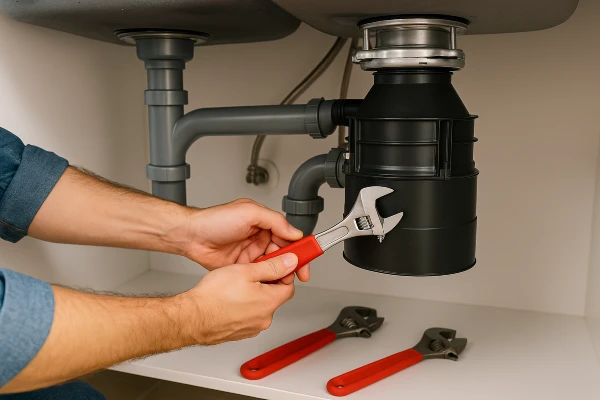
Commercial work leans into heavy cutters and saws. Magnetic drill presses allow you to cut precise holes in steel for hangers and supports. Pipe saws with chain vises make clean cuts on large diameter pipe. For stainless, a cold-cut saw preserves edge quality without tempering. Even seemingly simple tools like deburring tools scale up; for 4 inch copper, you need a reamer that won’t chatter and scar the pipe.

Impacts and torque are different conversations too. A 1 inch impact with high-torque sockets is common for flanged connections and structural supports. When the specification calls for tightened flanges to a pattern and torque, calibrated torque wrenches come out, often with certificates on file. In residential service, that level of documentation rarely appears, though it does help on some water heater flanges and gas unions.
Safety gear integrated into the toolset
Every plumber owns gloves and eye protection. The difference in commercial work is the number of tasks that add specialized safety to the front of the job. Confined space gear shows up when you open a vault or manhole: tripod, winch, gas meter, and retrieval line. Hot work permits drive you to keep fire blankets, extinguishers, and a fire watch when torches or welders come out, which affects what tools you can use in certain areas. On sensitive sites, non-sparking tools for certain atmospheres may be specified for valve work.
Even something as simple as a shop vacuum shifts form. In a house, a 12 gallon wet/dry vac is fine. On a site with silica exposure rules and frequent coring, you carry HEPA vacuums with auto filter cleaning to keep compliance in line while coring slab penetrations. The vacuum becomes part of the coring rig, not an afterthought.
The rhythm of maintenance and the diagnostic toolkit
Residential service calls can be sporadic with variety, so tools trend toward generalists. A good multimeter that can test outlet voltage, continuity, and thermocouple output handles most appliance diagnostics. A hand-held thermal camera helps find hidden leaks or insulation gaps, and you can justify it on a few jobs per month.
In commercial buildings, preventive maintenance schedules drive recurring use of specialized diagnostic tools. Ultrasonic leak detectors help find compressed air or steam leaks. Advanced thermal cameras show performance in hydronic loops and domestic hot water recirculation. Data loggers capture temperature and pressure over days to verify suspect mixing valves or pump operation. Valve exercisers become tools in their own right on campuses, where a stuck 8 inch valve could shut down a wing. Even simple meter keys and hydrant wrenches upgrade to gear designed for city fixtures rather than subdivision curb stops.
Plumbing projects that blur the line
Not every job fits neatly into a category. Multi-family buildings can feel residential on fixture counts, yet run commercial boilers and larger risers. In those cases, contractors bring a hybrid kit: press tools for speed on branch lines, grooved or welded mains for durability, and drain cleaning gear sized for 4 inch stacks. Retail tenant improvements sit in small spaces but tie into a building’s shared infrastructure, so you might use residential-scale install tools and commercial-scale core drilling and firestopping.
Anecdotally, the biggest surprises come when a residential plumber lands a job in a school or church and underestimates the gear for shutdowns. Isolation valves that have not turned in a decade, lines that backfeed across loops, or lack of mechanical drawings can turn a simple tap into a night spent hunting for a functional shutoff. The takeaway is not that one world is harder than the other, but that scale and risk profile dictate preparation. Tools are the physical expression of that preparation.
Code and documentation drive tool choices
Codes overlap, but enforcement and documentation differ. Residential inspectors focus on fixture counts, venting, trap arm lengths, water heater safety, and proper materials. The process feels personal and quick. When issues arise, simple corrective work and photos often suffice.
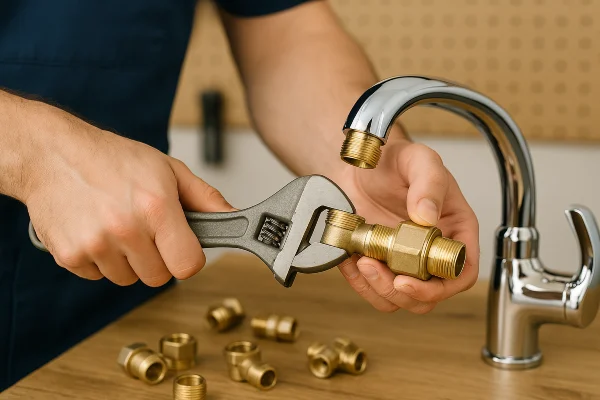
Commercial inspections and commissioning bring submittals, O&M manuals, torque specs, pressure logs, and third-party tests. That means your tool list includes calibrated gauges, data loggers, torque wrenches with certificates, and label printers that meet spec for pipe marking. Fire life safety adds its own layer. Even when you are running the same copper and PEX, the audit trail pulls your toolkit into a different place.
Cost, durability, and the economics of ownership
It is tempting to frame commercial plumbing tools as bigger and pricier, and that is partly true. The better way to think about it is duty cycle and expected lifespan. A commercial-grade press tool costs more because it is expected to press thousands of joints per month and stay in calibration. A roll groover lasts decades and can be rebuilt. A sectional drain machine can be serviced on site with new couplings and cables.
Residential plumbing tools emphasize agility and lower weight. They get used hard, then sit. A homeowner-focused press tool might be perfect for a remodeler who installs a handful of copper lines per job and values lightness over relentless duty. The economics favor buying what you will truly use. Renting heavy gear for occasional commercial-scale work is often smarter than owning it, as long as you build the time for pickup, setup, and learning curve into the bid.
Examples from the field
A restaurant retrofit: We had to replace a grease line under slab with minimal downtime. The camera showed heavy scaling and broken sections. For access, we used a compact coring rig to open the floor cleanly near walls, paired with a HEPA vacuum for dust control. The jetter ran at 3,500 psi with a warthog nozzle to clear scale ahead of the pipe bursting head. On the new run, we grooved 3 inch ductile sections and set them on adjustable stands, then tied into an existing 4 inch line with a shielded coupling. In a house, the same job would have been PVC replacement with solvent welds and a small drum machine. Neither approach is better in a vacuum; each matches the context.
A school boiler changeout: The old pump flanges required precise torque to avoid leaks on startup. We used a calibrated torque wrench and documented the pattern, then pressure tested the loop to 125 psi with an electric test pump. A residential water heater swap would not demand that level of procedure. The difference isn’t competence, it’s consequences. When a school’s loop leaks, the custodian calls a superintendent and the building might lose heat for a wing.
A condo riser repair: Tight shaft access meant that welding was not an option. We opted for copper press fittings for the 2 inch domestic risers, coordinated an overnight shutdown, and staged every press sleeve and valve in sequence. The press tool had fresh batteries, a backup tool on-site, and calibrated jaws. That redundancy is a commercial habit. In a single-family setting, one tool and a charger would be acceptable risk.
Where the common ground holds
It’s not all divergence. A sharp tubing cutter is a sharp tubing cutter. Good hole saws, a reliable reciprocating saw, quality drill bits, and thoughtful storage systems help in every setting. Discipline around cleanliness, deburring, and alignment translates directly, no matter the pipe size. And a plumber’s judgment about when to stop and reassess is the most important tool across the board. I have seen more leaks prevented by someone asking for a second set of eyes than by any machine.
A compact side-by-side that helps decision making
- Residential plumbing tools tend to be lighter, handheld, and optimized for 1/2 to 1 inch lines, PEX and PVC joining, and quick service access. Commercial plumbing tools scale up for 2 to 8 inch systems, multiple materials, and methods like grooved, welded, and large-diameter press. Diagnostic and verification in homes lean on simple gauges and basic cameras. Commercial jobs expect calibrated instruments, data logging, and more powerful inspection and cleaning equipment. Packaging and mobility differ: vans and pouches versus carts, job boxes, and staged machinery near work zones. Safety and compliance tools are minimal in homes and integral on commercial sites, from confined space kits to HEPA extraction on coring work. Economics push residential plumbers toward versatile, portable tools, while commercial teams invest in heavy gear with long duty cycles and certifications.
Practical guidance for building your kit
If you mostly tackle residential service and remodels, focus on speed and access. A compact press tool for copper up to 1 inch, a full PEX crimp or expansion set, a reliable drum machine with 75 feet of cable, a 100 foot camera, and a decent thermal camera will pay for themselves quickly. Keep your hand tools lean and invest in lighting and a small flexible inspection mirror. Add a basic gas sniffer and a compact combustion analyzer if you’re working on appliances.
If your work leans commercial, plan for width. A roll groover with a power drive, a power threader up to 2 inch at minimum, press tools with large-diameter capacity, and a sectional drain machine give you the backbone. Pair those with a 3,000 to 4,000 psi jetter if you handle kitchens. Bring calibrated torque wrenches, differential pressure meters, and a labeling system that matches spec. Build out your carts and stands so the job moves toward you instead of you lugging everything to the job.
For those who straddle both worlds, be intentional. You do not need to own everything. Develop relationships with rental houses for groovers, core rigs, and high-end jetters. Own the mid-weight gear that bridges projects, like a 2 inch capable press tool with interchangeable jaws. Keep your documentation habits at commercial grade even on small jobs; it keeps you sharp and reduces mistakes.
The human factor behind tool choices
Tools don’t decide problems, people do. A plumber on commercial sites learns to plan around access windows, coordinate with building operations, and stage redundancy. That influences what goes into the truck. A residential plumber reads a jobsite differently, listening for the creak of an old valve before touching it, carrying temporary shutoffs, and protecting finished spaces as if they were their own. Those instincts shape toolkits as much as any catalog. And across both domains, good habits matter more than brand names: clean cuts, square joints, verified torque, and documented tests.
When shopping lists and marketing blur the picture, look at the job’s scale, materials, code expectations, access limits, and consequence of failure. The right commercial plumbing tools or residential plumbing tools are the ones that let you meet those realities without drama. The rest is just weight on your back.
THE LEANDER PLUMBER - COMPANY 1789 S Bagdad Rd #103, Leander, TX 78641 (737) 530-8021